




Few spa services carry as much folklore as dermaplaning. A blade, a face and an internet full of confident opinions is a recipe for misinformation, and most of it centres on one question: will the hair come back worse? This guide answers that directly, then works through the other misconceptions that keep people out of the treatment room or, worse, sends them home with a razor from the drugstore. Everything here reflects how dermaplaning is described and performed on OYESPA's skin menu in Inver Grove Heights. It is educational, not a substitute for the individual assessment your esthetician gives you at the chair.
What dermaplaning actually is
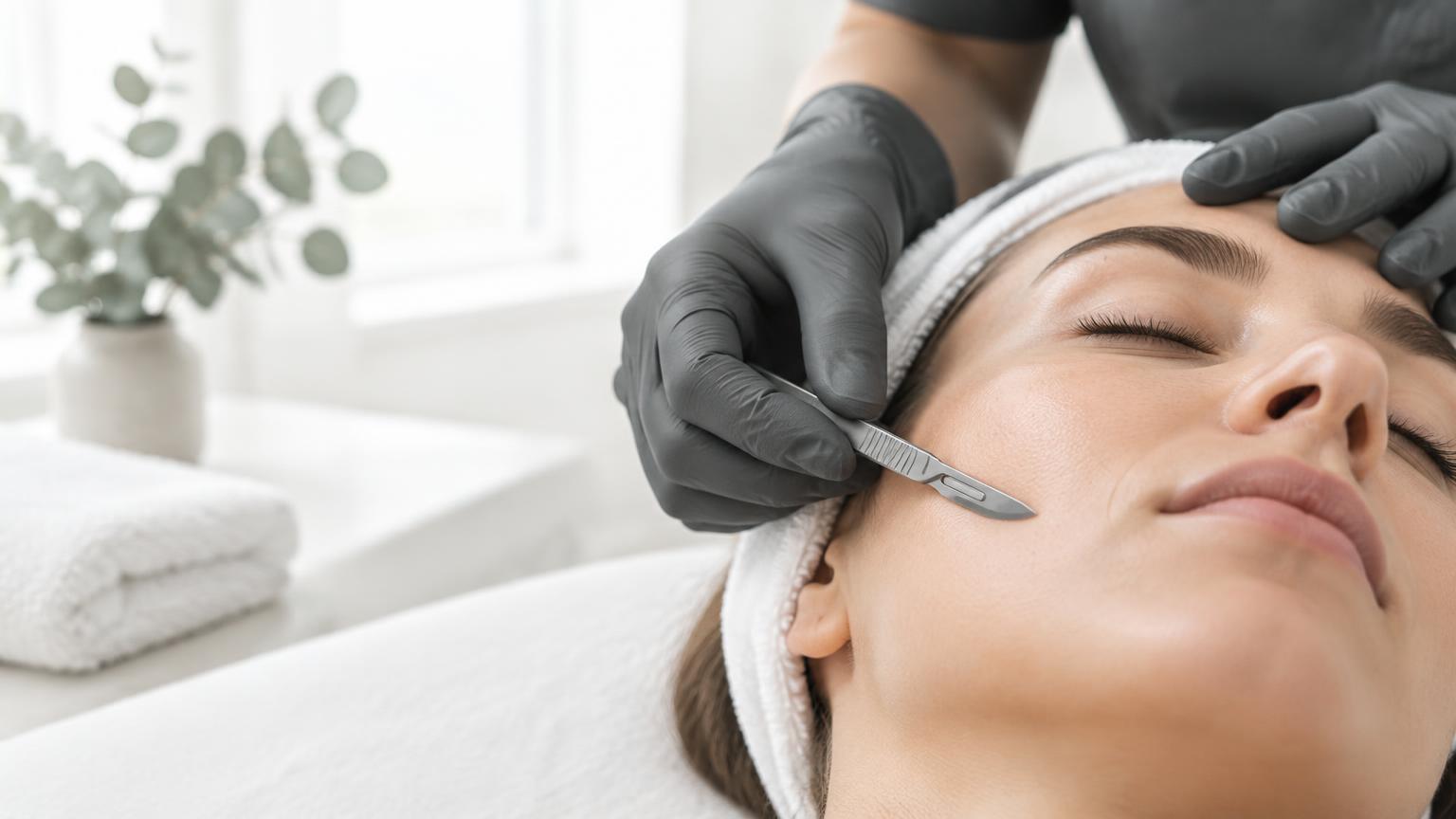
Dermaplaning is a manual exfoliating treatment. A licensed esthetician holds a single-use, sterile surgical blade at roughly a 45-degree angle and glides it across the skin in short, controlled strokes. Two things come off: the outermost layer of dead surface cells, and vellus hair, the fine, soft, lightly pigmented hair most people call peach fuzz.
That is the whole mechanism. Nothing is injected, nothing is heated, and nothing is left on the skin to keep working after the appointment. The immediate result is a surface that feels smoother to the touch, looks more even in daylight, and takes makeup more cleanly. Because the blade also removes the dull layer of cells sitting on top, serums and moisturizers can spread and absorb more evenly afterward.
The service is painless for most guests. There is no numbing required, no downtime to plan around, and no recovery window in the way a peel or microneedling session has one. Guests frequently schedule it as a stand-alone appointment or as an add-on to a facial, which is how OYESPA lists it on the dermaplane and peels page.
Myth 1: Your peach fuzz will grow back thicker and darker
This is the single most common reason people decline dermaplaning, and it is the one that is simply not true. Vellus hair grows back as vellus hair. Its colour, thickness and growth rate are set by the follicle below the skin, and a blade that cuts the shaft at the surface has no ability to change the follicle's instructions.
The reason the myth survives is a trick of touch. Uncut hair tapers to a fine point. Cut hair has a blunt end, so when it first pushes past the surface it can feel coarser against a fingertip even though nothing about the strand itself has changed. People read that sensation as proof of thickening when it is only proof of a flat cut.
The distinction that matters clinically is between vellus hair and terminal hair. Terminal hair is the coarse, pigmented hair found on the scalp, brow, underarm and beard area. Dermaplaning is a treatment for vellus hair on the face. It is not a substitute for shaving a beard, and it will not turn peach fuzz into terminal hair, because the type of hair a follicle produces is not decided by a blade.
If you have ever shaved your legs and watched the regrowth feel prickly a day later, you have already seen the sensation for yourself and lived through it. The same physics applies on the face, and the same outcome: the hair returns exactly as it was.
Myth 2: Dermaplaning is just shaving your face
There is overlap, which is why the comparison keeps getting made. Both remove hair at the surface with a blade. The difference is in what else comes off and how deliberately it is done. A razor is designed to cut hair, and any exfoliation it produces is incidental and uneven. Dermaplaning is performed at a set angle with the skin held taut, specifically to lift the top layer of dead cells along with the hair.
The tooling differs too. Professional dermaplaning uses a fresh, single-use surgical blade opened in front of you. A household razor is reused, stored damp in a bathroom, and is not sterile. That difference is not a matter of branding; it is the difference between a controlled clinical step and a improvised one.
The result differs as well. Shaving leaves the surface texture where it was. Dermaplaning is done for the smoothness and the immediate glow that comes from removing the dull top layer, which is why it sits on OYESPA's menu alongside peels and facials rather than in the shaving aisle.
Myth 3: A drugstore razor gets you the same result for less
At-home dermaplaning kits have turned a clinical procedure into an unboxing video, and the appeal is obvious: it is cheaper and it is Tuesday night. The risks are less obvious, which is exactly the problem.
The face has bony prominences, mobile skin and areas where a blade can catch in a fraction of a second. Cuts, nicks and micro-abrasions are the most immediate concern. Beyond that, a blade that is not single-use and sterile can move bacteria across the face, and aggressive repeated strokes over the same spot can compromise the skin barrier. On skin prone to pigment changes, that irritation can leave marks that take far longer to fade than the appointment would have cost.
There is also the assessment problem. A professional looks at your skin before the blade touches it and decides whether the treatment is appropriate today, whether an area should be avoided, and whether a different service would serve you better. A video cannot see your skin. If you and your esthetician both agree a light at-home maintenance routine makes sense between visits, ask for specific product and technique guidance rather than improvising from a tutorial.
Myth 4: Dermaplaning will make you break out
Dermaplaning does not cause acne. Acne has causes, and removing dead surface cells is not one of them. In fact, clearing that layer can help products spread more evenly and can make skin look less congested immediately after.
What can go wrong is doing it over skin that is already inflamed. OYESPA's own guidance is to avoid dermaplaning over active, inflamed breakouts. Dragging a blade across a live pustule can open it, spread its contents to neighbouring skin, and slow the healing that was already underway. That is not the treatment causing a breakout; it is a treatment performed on skin that needed something else.
Hygiene after the appointment matters more than the appointment itself. Clean hands, clean pillowcases, no picking, and no stacking of strong new actives on freshly exfoliated skin. If a blemish does appear, consider whether a new product introduced that week is the likelier culprit before blaming the blade.
Myth 5: It thins your skin or is too harsh to repeat
The layer removed is the stratum corneum, the outermost band of cells that your skin is already shedding on its own. Removing it does not make living tissue thinner, and the skin resumes its normal cycle of producing and shedding cells afterward. This is why the effect fades over a few weeks rather than accumulating into a permanent change.
Where the concern has real merit is frequency. Exfoliation is a dose, and more is not better. Coming back every few days, or combining dermaplaning with strong at-home acids and retinoids in the same week, can leave skin tight, reactive and uncomfortable. That is a barrier problem created by overdoing it, not a reason to avoid a properly spaced treatment.
The reasonable rhythm is to let the skin complete its own turnover between sessions. For most guests that lands around three to four weeks, which is also roughly when the vellus hair has grown back. Your esthetician can confirm the right interval for your skin, especially if you use prescription actives.
Myth 6: Anyone can have it, any time
Dermaplaning is gentle, but gentle is not the same as suitable for everyone. Certain situations call for a different service or a later date, and a professional assessment is what catches them.
Tell your esthetician if you are currently using or recently used isotretinoin, if you use a prescription retinoid such as tretinoin, if you are on blood thinners, if you have a history of unusual or raised scarring, or if you have active cold sores, sunburn, eczema or a rosacea flare in the area. Recent chemical peels, laser treatments and waxing on the same skin all affect timing too.
Pregnancy and breastfeeding deserve a conversation as well, mostly because skin behaves differently during those periods and because a careful provider would rather ask than assume. None of this is a permanent disqualification. In most cases it simply changes the date, the area treated, or the service recommended.
This is the part of the appointment that no tutorial replaces: someone qualified looking at your actual skin and deciding what is appropriate today.
Myth 7: One session fixes texture, pores and pigmentation
Dermaplaning is an excellent surface treatment, and surface treatments do surface work. Skin feels smoother and looks brighter right away, makeup sits better, and dullness from built-up dead cells is reduced. Those are real, and they are the reason guests keep the appointment on a regular cadence.
What it does not do is close pores, which are not doors that open and shut, or erase established sun damage, or fill in a fine line, or remodel an indented acne scar. Those goals belong to different categories of treatment. OYESPA's advanced skin menu exists for exactly this reason: chemical peels for tone and surface irregularity, SkinPen microneedling for texture and selected scars, Aerolase for laser-based work, and HydraFacial for cleansing, exfoliation, extraction and hydration in one sitting.
A useful way to think about it is that dermaplaning is often the first step rather than the whole plan. It can prep skin so a peel performs more evenly, and it pairs well with LED therapy. If your goal is bigger than smoothness, say so at the consultation and let the esthetician build the sequence, including the spacing between steps.
What an OYESPA dermaplane visit includes
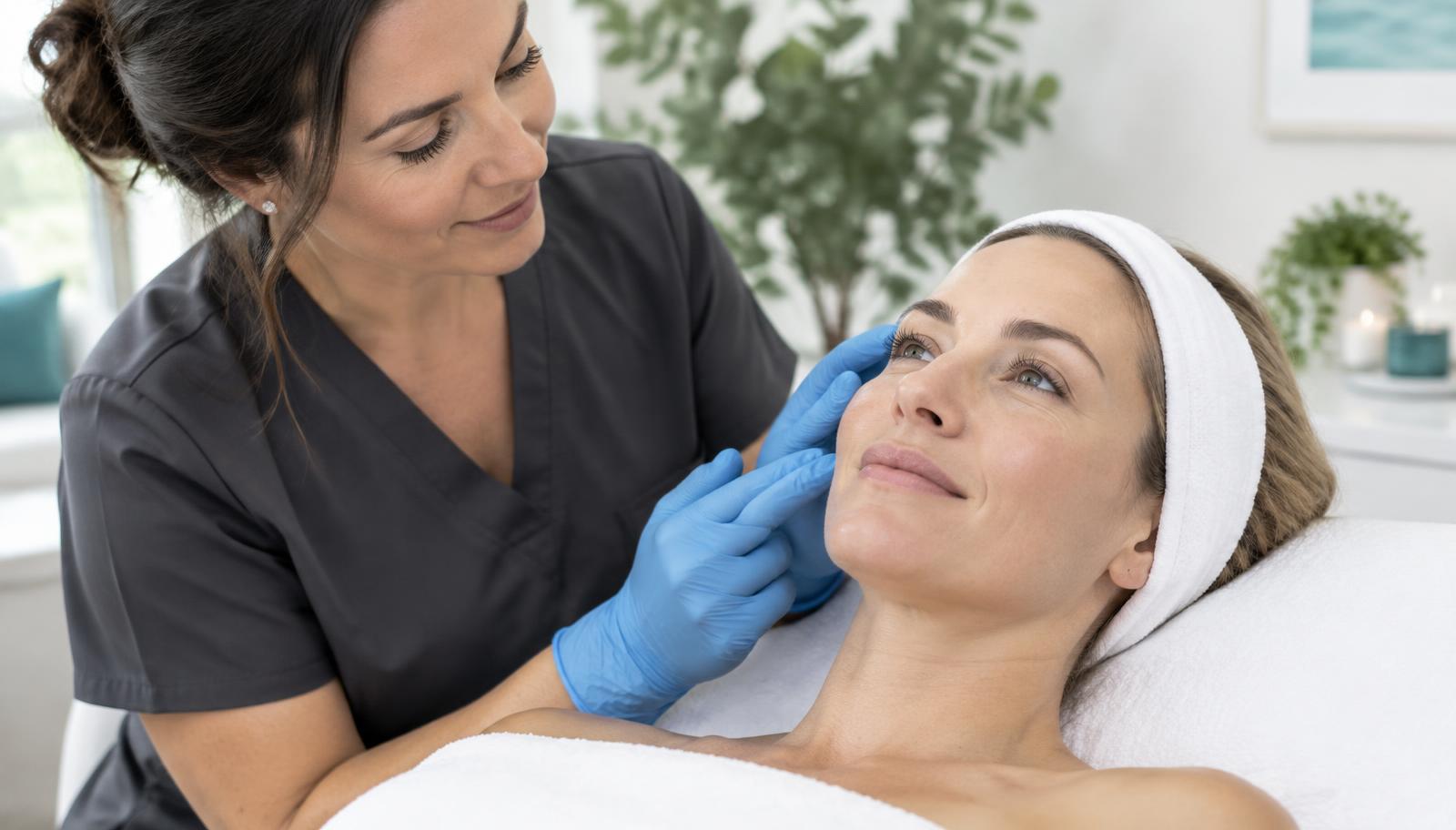
The service page describes the appointment as beginning with a thorough skin analysis and consultation, followed by a cleanse and gentle prep. The dermaplane step is then performed, optionally alongside a customized chemical peel chosen for your skin, and the treatment finishes with soothing serums, a mask and an SPF finish, plus aftercare guidance and product recommendations.
Listed pricing starts at $49+ for a 15-minute Oilplane/Dermaplane that does not include a facial, $99+ for a 30-minute Oilplane/Dermaplane Facial, and $149+ for the 60-minute version. Appointments run 30 to 60 minutes depending on the option. A $39+ physician fee and a $29+ Good Faith Exam may apply to advanced services, so confirm the full quote when you book rather than assuming the advertised base covers everything.
If you want the smoothness without a full facial, the short option is the efficient choice. If the goal is a brighter, more even complexion overall, pairing dermaplaning with a peel in the same visit is where the two services support each other.
How to plan around it, especially in a Minnesota winter
Timing is mostly about events and about sun. Because there is no real downtime, dermaplaning is one of the more forgiving services to book close to a holiday party, a photograph or a wedding. The cautious exception is a first visit: if your skin has never had it, try it with a little buffer so you can see how it responds.
Freshly exfoliated skin is more vulnerable to ultraviolet exposure, so sunscreen is not optional afterward. In Minnesota that matters even in November. Snow and clear winter skies reflect light, and long drives with the sun low through the windshield add exposure that people do not always register as a summer concern.
Winter also brings its own trade-off. Indoor heating and cold air make dryness more noticeable, and dryness can make skin look duller than it is. Dermaplaning removes the dull layer, but the moisture underneath still needs support. Follow the aftercare and product guidance you are given, and mention any stinging or tightness rather than pushing through it.
If you are also considering a peel, microneedling or a laser service, do not stack them the same afternoon. Tell the team what is already on your calendar so the sequence and the spacing are planned properly.
Booking dermaplaning in Inver Grove Heights
OYESPA is at 7741 Amana Trail, Inver Grove Heights, MN 55077, with free parking, serving guests across the Twin Cities south metro including Eagan, South St. Paul, West St. Paul, Mendota Heights, Rosemount and Cottage Grove. The spa is open 9 am to 7 pm, seven days a week.
Call 651-371-9100 or book online to reserve a dermaplane appointment or a dermaplane facial. If you are unsure whether your concern is surface dullness or something deeper, say so when you call. A quick conversation usually settles whether dermaplaning alone is the right booking, or whether it should be paired with a peel, a facial or an advanced skin consult.
And if peach fuzz is the only thing holding you back, let this be the last word on it: it grows back exactly as it was. The smooth skin is the part you will notice.
Questions & Answers
What is dermaplaning?+
A gentle exfoliating treatment that uses a sterile, single-use surgical blade held at about a 45-degree angle to remove dead surface skin and vellus hair, also called peach fuzz. It smooths texture and boosts glow immediately.
Does dermaplaning make hair grow back thicker or darker?+
No. Vellus hair grows back exactly as it was, with the same colour, thickness and growth rate. A blunt cut end can feel coarser as it first emerges, but the follicle itself has not changed.
How often should you dermaplane?+
Most guests book about every three to four weeks, which matches the skin's own turnover cycle and the time it takes vellus hair to grow back. Your esthetician sets the right interval for your skin, especially if you use prescription actives.
How long does dermaplaning last?+
The smoothness and brightness are visible right away and gradually fade as skin continues shedding cells and hair regrows, typically over three to four weeks. It is a maintenance treatment rather than a one-time correction.
Is dermaplaning good for your skin?+
For most people it is a comfortable way to reduce surface dullness, smooth texture and help makeup and skincare sit better. It is not appropriate over active inflamed acne, sunburn, cold sores or irritated skin, and it does not treat deep wrinkles, pigmentation or scars.
Can I dermaplane at home instead?+
At-home kits exist, but they carry real risks: cuts, irritation from repeated passes, and bacteria spread by a blade that is not single-use and sterile. A professional also assesses your skin first and adjusts or skips the treatment when needed.
Who should not get dermaplaning?+
Tell your esthetician before booking if you use or recently used isotretinoin, use a prescription retinoid, take blood thinners, have a history of unusual scarring, or have active cold sores, sunburn, eczema or a rosacea flare. Recent peels, laser or waxing on the same skin also affect timing.
Can dermaplaning be added to a facial?+
Yes. OYESPA offers a 15-minute dermaplane on its own and 30- and 60-minute dermaplane facials, and the treatment pairs especially well with a customized chemical peel or an LED session.
How much does dermaplaning cost at OYESPA?+
Pricing starts at $49+ for a 15-minute Oilplane/Dermaplane without a facial, $99+ for a 30-minute dermaplane facial and $149+ for a 60-minute dermaplane facial. A $39+ physician fee and $29+ Good Faith Exam may apply to advanced services.
Where can I book dermaplaning near Inver Grove Heights?+
OYESPA at 7741 Amana Trail, Inver Grove Heights, MN 55077, open 9 am to 7 pm seven days a week. Call 651-371-9100 or book online.